Literature of and after the Vietnam War: 50 Years of Peace and Conflict
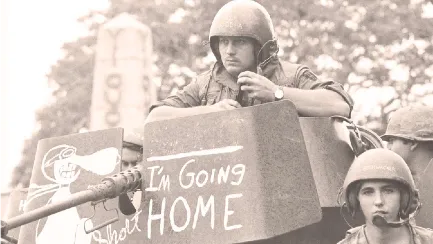
The war that seemed half a world away suddenly felt very close. Friends, neighbors, and colleagues began to feel the costs of war directly as casualties mounted. An army fighting with the most advanced technology available struggled to suppress a movement that promised freedom and self-determination to its followers. Daily, news of the devastation beamed directly to viewers around the world, a horror impossible to ignore as it unfolded in real-time. Columbia’s campus, unable to ignore the suffering abroad and its nation’s involvement, rose in anger—at the war and, at times, seemingly at itself.
US involvement in the Vietnam War ended 50 years ago this year. The consequences of that war—for the Vietnamese people, US and Vietnamese combat veterans, and society—linger. The war tested the limits of American military power abroad. At home, the war brought new forms of protest to campuses across the country. In many ways, we live, work, and study on a campus shaped by war.
This seminar (July 16, 23, 30, and August 6, 2025), considers the literature of and related to the US war in Vietnam. We’ll read poetry, prose, memoir, and make time for some film. The seminar will begin with accounts of the war abroad. Our second meeting considers the reaction against the war at home. From there, we’ll look at reflections on the war in the decades that followed. We’ll conclude with recent events, asking how thinking of the US involvement in the Vietnam War and the protests against it might help us understand some of Columbia’s responses—student, faculty, and administrative—to the ongoing war in Palestine. What kinds of continuities can we uncover between the campus’ response to the Vietnam War and its engagement with the war in Gaza? How did (and does) Columbia’s position as a leading university influence domestic political discourse? How might literary engagements with this earlier moment of conflict help us navigate the current day with passion and empathy?
Here's an outline of the material covered over the 4 week seminar:
16 July: Introductions & Literature of the War
- Graham Greene, from The Quiet American (1955)
- Tim O’Brien, “On the Rainy River” from The Things They Carried (1990)
- Dang Thuy Tram, from Last Night I Dreamed of Peace: the Diary of Dang Thuy Tram (2005)
- Apocalypse Now, dir. Coppola (1979)
23 July: Protest! Literature Against the War
- Norman Mailer, from The Armies of the Night (1968)
- Wallace Terry, from Bloods: An Oral History of the Vietnam War by Black Veterans (1984)
- Simon Wall, from Peace and Freedom: The Civil Rights and Antiwar Movements in the 1960s (2006)
30 July: After War and Reflections
- Viet Thanh Nguyen, from Nothing Ever Dies (2016) and The Sympathizer (2015)
- Tobias Wolff, from In Pharaoh’s Army: Memories of the Lost War (1994)
- “Watt Raises Obstacle on Vietnam Memorial,” New York Times(13 Jan. 1982)
- “Goodbye, Farewell and Amen,” the finale to M*A*S*H (1983)
6 Aug: How does the Vietnam experience continue to shape campus culture?
- Bill Chappell, “In Columbia University’s protests of 1968 and 2024, what’s similar—and different,” NPR (29 Apr. 2024)
- Columbia College Student Council, “We Columbia University Students Urge You to Listen to Our Voices” (4 May 2024)
- Mansee Khurana, “What a 1968 Columbia Protestor Makes of Today’s Encampment,” NPR (29 Apr. 2024)
About the Instructor:
Nick Utzig is assistant professor of English in the Dept. of English and World Languages at West Point. He received his PhD from Harvard University, where his research focused on representations of war in English Renaissance literature. His scholarly work appears in Shakespeare Studies, Shakespeare Bulletin, and The Journal of War and Culture Studies, and his reviews may be found in Theatre Survey, Comitatus, and the LA Review of Books. Nick is currently working on a book on representations of the return from war in Shakespearean drama. Before his PhD, Nick was a US Army aviation officer and served in Afghanistan and Iraq. He lives in Westchester with his wife and two children.
Note: Non-Columbia affiliated guests must register by 12:00 pm prior to the day of the seminar to receive access to the Morningside campus.
Register for the weekly seminar below.