Co-Creating Veteran Readiness at Penn State
What does a successful partnership look like? Sometimes, it means making yourself unnecessary. Three years ago, CVTI and Penn State launched a collaboration to help student veterans prepare for college. This year, something remarkable happened, and it was exactly what we'd hoped for from the beginning.
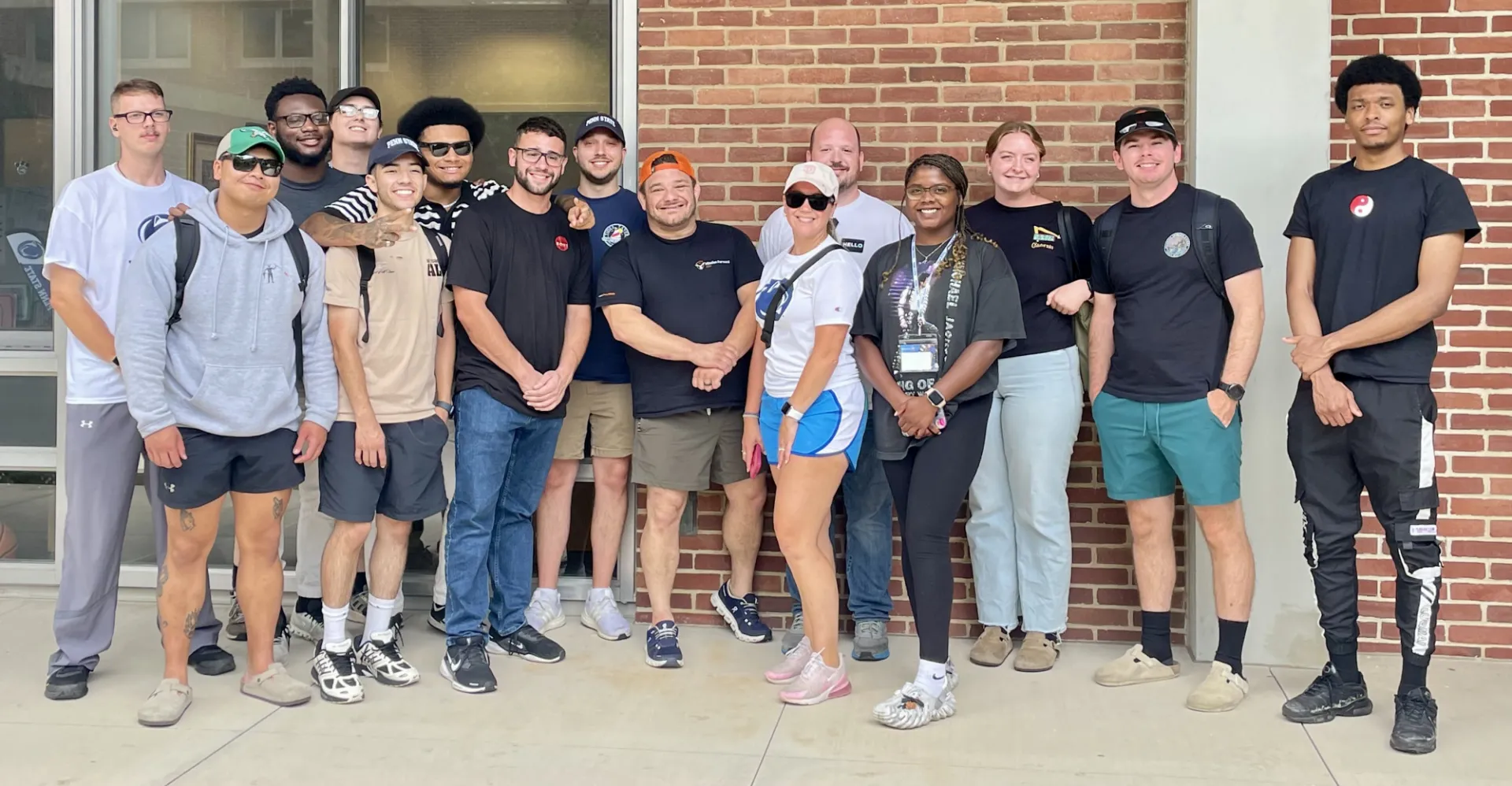
Developing the Veterans College Boot Camp
During the spring semester of 2024, Renee Thornton-Roop and her colleagues at Penn State University’s Office of Veterans Programs invited CVTI’s Director of Education, R.J. Jenkins, to join their team in teaching and facilitating sessions as part of the Veterans College Boot Camp, a new bridge program designed to help veterans, service members, and their families transition successfully into university life at Penn State.
The Boot Camp exposes participants to academic, social, financial, and wellness resources before their first semester even begins, setting the stage for both immediate and long-term success. In August of 2024, Jenkins traveled to State College, Pennsylvania to work with the first cohort of students in person, and he was blown away by what he experienced.
"The students in this program were so smart, so kind and welcoming, so honest about their fears, and best of all, each and every one of them showed up ready to learn, grow, and connect," said Jenkins. "There's nothing like getting to work with a group of students who are hungry to achieve their goals and realize their fullest potential."
In August of 2025, Jenkins returned to State College to help teach the program's second cohort. Importantly, the second cohort was twice the size of the first, indicating the growing popularity of the initiative. As with the first cohort, Jenkins delivered a range of workshops focused on building essential study skills and reframing impostor feelings as an organic byproduct of aspiration rather than a sign of unbelonging. Again, Jenkins was deeply impacted by the students he met.
"I tell students all the time, when your first action in college is to seek help and connect with resources, that's one of the strongest indicators that you will succeed."
Collaboration and Impact
The collaboration between CVTI and Penn State began in 2024 after Penn State's Senior Director of the University Office of Veterans Programs and the Senior Director of Veterans Affairs attended a national conference and saw CVTI’s work in action. They reached out soon after, seeking support in building institutional capacity and designing a scalable, research-informed transition program for student veterans.
Together, CVTI and Penn State developed the Veterans College Boot Camp curriculum, an intensive, evidence-based experience rooted in belonging, growth mindset, and the social-emotional competencies that underpin academic success. The program helps participants build confidence, connect with peers, and translate their military strengths into meaningful pathways for success in higher education.
Penn State is tracking the following metrics for the Boot Camp cohort, with plans to expand longitudinally to academic persistence and completion outcomes:
- Academic readiness in the first term
- Academic achievement in the first term
- Campus and community engagement
- Identification and utilization of resources and institutional/community support
Year Three: From Participants to Peer Leaders
When CVTI and Penn State first began collaborating on the Veterans College Boot Camp, Jenkins and Thornton-Roop shared an important goal: eventually, the academic skills curriculum developed and delivered by CVTI would be taught by Penn State's own student veterans.
For Jenkins, this was a critical part of the partnership from the very beginning.
"At CVTI, we're not interested in creating programmatic dependency," Jenkins explained. "We want to help institutions develop the capacity to do this work themselves. So when Renée first invited me to participate, I told her I'd love to help, but I had one condition: in three years, I wanted the students themselves to be teaching this material. And she immediately said yes."
In August 2026, that shared vision became a reality.
Rather than returning to Penn State to deliver the academic skills workshops himself, Jenkins worked with five student veteran mentors, all alumni of previous Veterans College Boot Camp cohorts, to prepare them to facilitate the sessions for incoming students.
The results exceeded his expectations.
"Watching these five student veterans step into that role was one of the most rewarding experiences I've had in this work," Jenkins said. "These were students who had once come to Boot Camp looking for guidance themselves. Now they were standing in front of the room, sharing what they'd learned and helping the next group of students find their footing. And they absolutely crushed it."
The significance of this transition extends well beyond the delivery of academic skills content. By placing student veterans in leadership roles, the program gives incoming participants an opportunity to learn directly from peers who understand their experiences and have successfully navigated the same transition. It also gives the mentors an opportunity to recognize and exercise their own capacity as educators and leaders.
For CVTI, this is what meaningful institutional capacity building looks like: not simply developing and delivering effective programming, but helping partners build something they can sustain, adapt, and make their own.
"I'm not sure I've ever been prouder to make myself unnecessary," Jenkins reflected. "Three years ago, Renée and I talked about what this program could become. Getting to watch those students take ownership of the work, and do it so beautifully, was an extraordinary privilege."
Voices from Penn State
“Working with the Columbia University Center for Veteran Transition and Integration, and with R.J. Jenkins specifically, has had a profound impact on our staff, students, and the services and programming we provide to this population.
The tools that R.J. has provided us, powerfully shared through his vulnerability and authentic connection to our staff and students, have not only informed our practice, but more importantly, have provided our students with the confidence and joy of true possibility, and of excitement for themselves and their futures.
As for our staff, R.J.'s care and enthusiasm for the student veteran population have reinvigorated our sense of purpose and passion in serving our students, providing us, too, with a renewed hope of possibility. His knowledge and advocacy have been a tremendous gift that we will continue to share enthusiastically with our students through our daily practice.”
— Penn State University Office of Veterans Programs
A Shared Commitment
Through this partnership, Penn State and CVTI have created more than a single program; they’ve built a model for how universities can translate veteran-centered research into daily practice, helping veterans not just enter college, but thrive in it.
The third year of the collaboration marked an especially meaningful milestone. What began as a partnership to develop and deliver academic transition programming has evolved into a program in which student veterans themselves are taking the lead. It's a powerful illustration of what can happen when institutions approach collaboration with the goal of building lasting local capacity, rather than creating an ongoing reliance on outside expertise.
The Veterans College Boot Camp stands as a living example of what's possible when institutions invest in their student veterans, recognize their potential as leaders, and give them the opportunity to help those who come after them succeed.