Beyond the Classroom: Building Veteran-Ready Workplaces Through Corporate Partnerships
For much of its history, the Columbia University Center for Veteran Transition and Integration (CVTI) has worked closely with colleges and universities to help student veterans navigate the transition from military service to higher education. Through research, educational programming, and institutional partnerships, CVTI has helped campuses across the country better understand the experiences of student veterans and create environments in which they can succeed.
But the transition from military service doesn't end at the classroom door.
For many veterans, the next chapter unfolds in the workplace, where they encounter new organizational cultures, unfamiliar expectations, and opportunities to put their military experience to work in entirely different ways. And just as colleges and universities have a responsibility to understand and support the veterans they serve, employers have an important role to play in creating environments where military-connected employees can flourish.
That recognition has helped shape an expanding dimension of CVTI's work: partnering with companies that want to move beyond simply hiring veterans and toward building workplaces that are genuinely prepared to support them.
In 2026, CVTI's collaborations with Amazon, Blackstone, and Quality Technology Services (QTS) offered three distinct examples of what that work can look like in practice.
Amazon: A Partnership Built on Trust
Over the past three years, CVTI has developed a close working relationship with Amazon's Global Military Affairs team, collaborating on initiatives designed to strengthen the experiences and outcomes of Amazon's veteran and military-connected employees.
That relationship took on an especially meaningful dimension at the 2026 Amazon Global Military Summit.
The annual summit brought together military-connected employees from across Amazon for two days of conversations about leadership, resilience, professional growth, and the challenges and opportunities that accompany life after military service. The program featured an extraordinary lineup of speakers whose experiences and perspectives offered participants plenty to reflect on.
But Amazon invited CVTI to do something more than deliver a presentation or contribute to the program. They asked CVTI to help participants make sense of the experience itself.
Working across the summit's many sessions and conversations, CVTI helped attendees identify recurring themes, reflect on the ideas that resonated most deeply, and consider how those insights might inform their own professional development and leadership. It was a different kind of responsibility, one that reflected the trust developed through years of collaboration.
For CVTI, the experience also reinforced an important principle: meaningful partnerships aren't simply about bringing outside expertise into an organization. They're about combining that expertise with an organization's own knowledge of its people, culture, frustrations, and aspirations.
Amazon understands its workforce and has demonstrated a sustained commitment to its military-connected community. CVTI brings research-informed perspectives on veteran transition, adult learning, and the ways organizational environments can either support or complicate that transition. Working together allows both organizations to accomplish more than either could independently.
And the work doesn't stop when the summit ends. The ongoing relationship between CVTI and Amazon reflects a shared commitment to helping military-connected employees succeed, while also strengthening the capacity of the organization to recognize and develop the talent they bring.
Blackstone: From Military-Friendly to Military-Empowering
If CVTI's work with Amazon illustrates the value of a sustained partnership, its engagement with Blackstone demonstrates another important dimension of building veteran-ready workplaces: helping employers rethink what it actually means to leverage military talent.
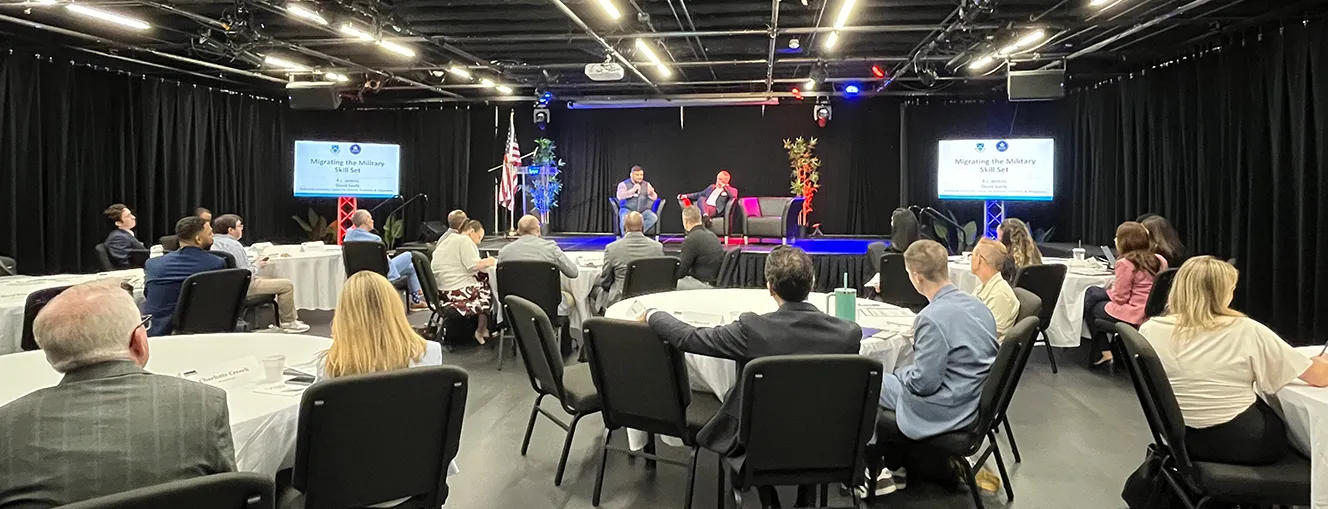
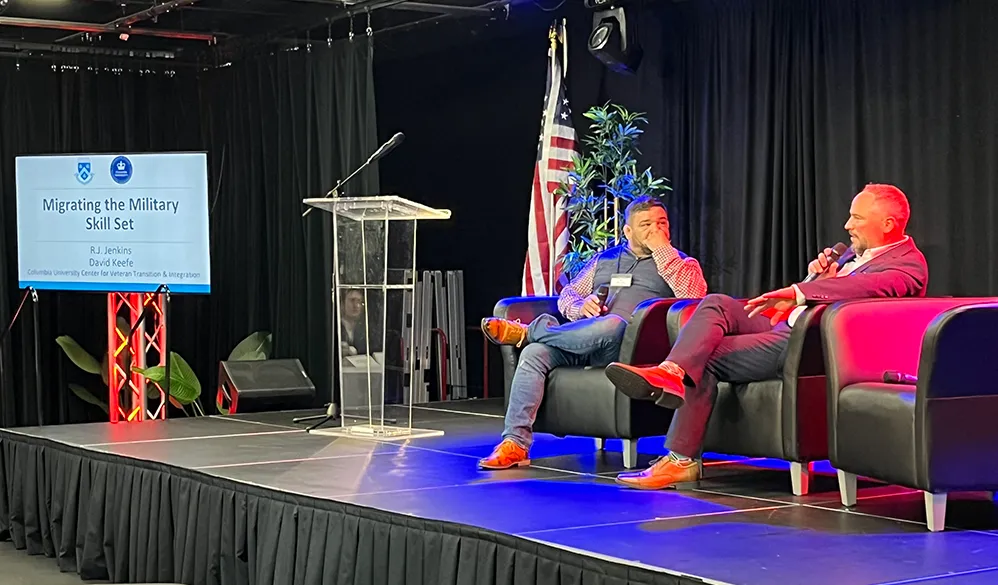
In 2026, CVTI was invited to deliver a workshop at the Blackstone Career Pathways Veterans Summit, held in partnership with Blackstone portfolio company UKG. The summit brought together representatives from across the Blackstone network to exchange ideas, celebrate progress, and explore ways to expand career opportunities for veterans, military spouses, and caregivers. CVTI's workshop, "Migrating the Military Skill Set: The Catalytic Power of Veterans in the Workplace," challenged participants to think differently about a familiar topic.
Conversations about veteran employment often begin with a question: How do military skills translate into civilian careers? It's an important question, particularly for veterans whose military occupations may have little obvious connection to the jobs they pursue after service. And employers have become increasingly familiar with the answer. Military service develops valuable capabilities that extend well beyond a service member's occupational specialty. Veterans often bring extensive experience working in complex environments, solving difficult problems, and leading others under challenging circumstances. But recognizing those capabilities is only the beginning.
The more consequential question is what happens after a veteran is hired.
Does the organization understand how to make use of that experience? Are managers equipped to recognize the distinctive strengths veterans bring? Does the workplace provide opportunities for veterans to apply their capabilities in ways that benefit both the employee and the organization? These questions formed the foundation of CVTI's workshop.
Rather than focusing exclusively on how veterans can translate their military experience for civilian employers, the session invited participants to consider what employers themselves must do to unlock the potential of military talent. The distinction is an important one. A military-friendly company may make a concerted effort to recruit veterans. A military-empowering company goes further, creating an environment in which veterans can contribute fully and where their experiences can become a source of organizational strength. For CVTI, helping employers make that shift is central to the work of building veteran-ready workplaces.
The Blackstone summit also illustrated the value of bringing organizations together around a shared challenge. By creating opportunities for companies to learn from one another, Blackstone is helping extend the impact of individual veteran employment initiatives across a much broader network. And, as it turned out, one of the most promising outcomes of CVTI's participation in the summit emerged from a conversation with another company in that network.
QTS: Listening as the Foundation for Partnership
At the Blackstone Career Pathways Veterans Summit, CVTI's R.J. Jenkins, Director of Education, and Dave Keefe, Director of Community Engagement, met representatives from Quality Technology Services (QTS), a Blackstone portfolio company and leading data center provider. Those initial conversations led to an invitation to visit QTS in Georgia and learn more about the company's approach to supporting its employees, including its growing military-connected workforce. A few months later, CVTI accepted.
The visit began at QTS's data center in Suwanee, Georgia, where Jenkins toured the facility and met with members of the company's Belonging & Engagement team. He learned about QTS's commitment to “Family, Faith and Community” and the many ways that commitment takes shape through volunteerism, employee initiatives, and community partnerships. He also learned more about Veterans Empowering Technology (VET), QTS's employee resource group dedicated to strengthening connections among military-connected employees and building a community of support within the company.
The second half of the visit took place at QTS's corporate offices in Duluth, where CVTI helped facilitate a series of focused listening sessions. These conversations brought together two groups whose perspectives are especially important to understanding the veteran employee experience: the people responsible for recruiting military talent into QTS and veterans who had recently joined the company. Hearing from both groups offered a valuable opportunity to explore the relationship between an organization's intentions and its employees' actual experiences.
What does the company hope to accomplish through its military recruiting efforts? What challenges do newly hired veterans encounter? Where are existing support structures working well, and where might there be opportunities to make them stronger?
For CVTI, these conversations reflect a fundamental belief about institutional change: before an organization can determine how best to support its veteran population, it needs to understand how that population experiences the organization. That understanding can't come from assumptions alone. It requires listening.
What emerged from the visit was a picture of a company already making meaningful investments in its military-connected workforce, but also eager to learn how those efforts might evolve. The engagement marked the beginning of what CVTI hopes will become a deeper collaboration with QTS. It also demonstrated how partnerships can grow organically. A workshop at the Blackstone summit created an opportunity for a new relationship, which in turn opened the door to a more focused exploration of veteran experiences within another organization.
Sometimes the most important first step in building a veteran-ready workplace isn't introducing a new program. It's asking better questions about the experiences of the people already there.
Beyond Higher Education: The Work of Building Veteran-Ready Cultures
On the surface, CVTI's engagements with Amazon, Blackstone, and QTS look quite different.
At Amazon, CVTI helped military-connected employees reflect on a major professional development experience and translate its lessons into action.
At Blackstone, CVTI challenged employers to reconsider how they recognize and leverage the capabilities veterans bring to the workplace.
At QTS, CVTI began by listening, working alongside company leaders and employees to better understand an existing organizational culture and identify opportunities to strengthen it.
Yet all three collaborations are connected by a common idea: supporting veterans effectively requires more than preparing veterans for the institutions they enter. It also requires preparing those institutions for veterans.
That principle has long informed CVTI's work in higher education. For years, colleges and universities have invested in helping student veterans adapt to academic life. But CVTI has consistently emphasized that successful transitions also depend on the willingness of institutions to examine their own practices, assumptions, and cultures. The same principle applies in the workplace.
Veterans certainly have a role to play in navigating their transition into civilian employment. But the responsibility for a successful transition cannot rest entirely on their shoulders. Employers, too, have an opportunity to learn, adapt, and create conditions in which veterans can make meaningful contributions.
That doesn't necessarily mean developing an entirely new set of veteran-specific programs. Often, it begins with understanding the existing workplace more clearly and recognizing how organizational practices shape the experiences of military-connected employees. This is where CVTI sees tremendous opportunity for the next chapter of its work. The goal is not simply to help more veterans find jobs, important as that is. It is to help employers become places where veterans can build rewarding careers and where the distinctive experiences they bring are understood as assets to the broader organization. The collaborations with Amazon, Blackstone, and QTS offer encouraging examples of companies taking that responsibility seriously.
They also demonstrate the many forms that effective collaboration can take. Sometimes it involves years of sustained partnership. Sometimes it begins with a single workshop that challenges conventional thinking. And sometimes it starts with an invitation to visit, listen, and learn.
As CVTI continues to expand its work beyond higher education, these partnerships point toward an increasingly important part of its mission. Building veteran-ready classrooms matters. So does building veteran-ready workplaces. And in both settings, the most meaningful progress happens when institutions recognize that supporting veterans isn't simply something they do for veterans. It's something they build with them.